Effluent Treatment Plant Manufacturer: Should Your Facility Build Its Own ETP or Join a CETP?
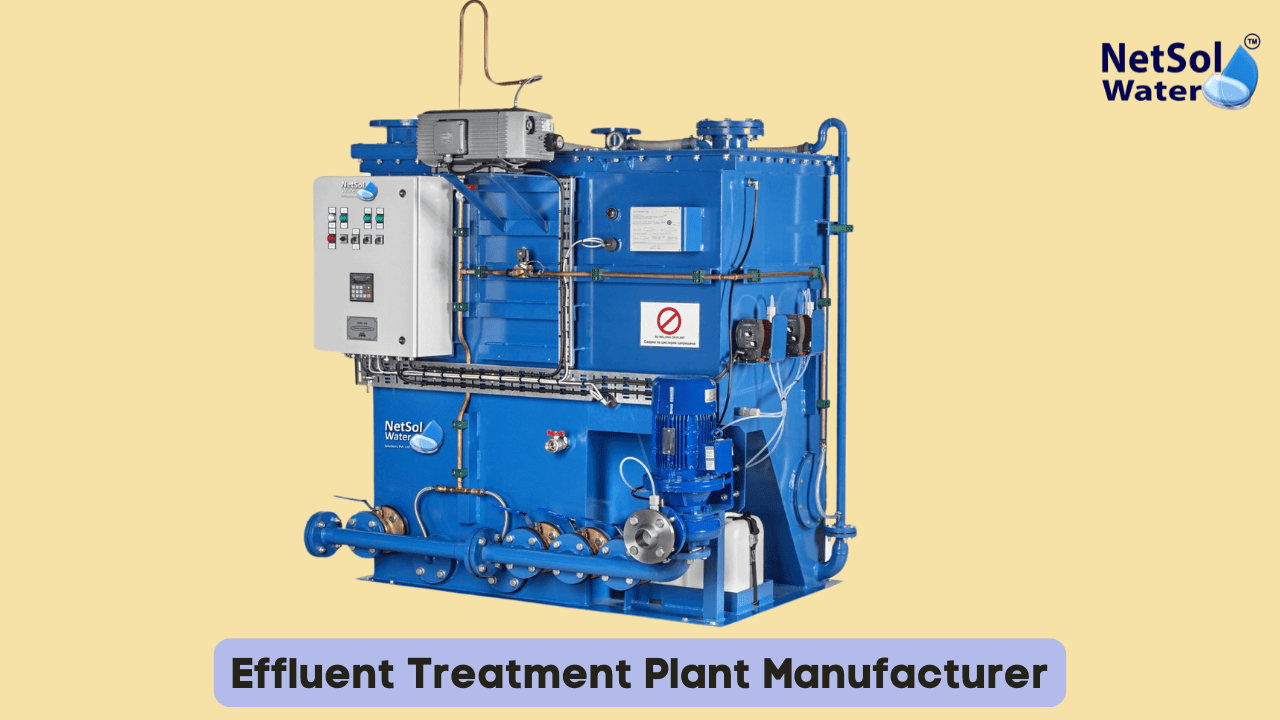
Every industrial facility generating wastewater faces this decision at some point, invest in a dedicated, in-house effluent treatment plant, or connect to a Common Effluent Treatment Plant and rely on shared infrastructure instead. This choice carries genuine, long-term consequences for cost, control, and compliance risk, yet it often gets decided based on whichever option happens to be immediately available in a given industrial area, rather than a genuine evaluation of which approach actually suits a specific facility's situation. Commercial RO Plant is the best effluent treatment plant manufacturer in India at best affordable price and quality.
Why This Decision Deserves Genuine, Deliberate Evaluation
The Two Paths Carry Fundamentally Different Trade-Offs
An in-house ETP means full control over treatment design, timing, and performance, but also full responsibility for capital investment, ongoing operation, and compliance. CETP membership shares infrastructure cost across multiple units, but also means depending on a shared system's performance and governance, something an individual facility doesn't fully control.
Why Industrial Estate Availability Often Decides This by Default
A lot of facilities end up with whichever option happens to exist in their specific industrial area, a CETP if one's already operating nearby, an in-house ETP if none is available, rather than a genuine comparison of which approach actually fits their specific production volume, budget, and risk tolerance.
Why This Decision Is Rarely Revisited Once Made
Many facilities make this choice once, often early in their operating life, and never genuinely revisit it as circumstances change. A unit that joined a CETP as a small operation years ago, and has since scaled production considerably, or diversified into a process generating meaningfully different effluent, may no longer be well served by that original decision, yet rarely stops to ask whether the arrangement still makes genuine sense today.
What Genuinely Favours an In-House ETP
Facilities With Unusual or Highly Specific Effluent Chemistry
A facility generating effluent that's genuinely difficult for standard CETP infrastructure to handle well, unusual chemical processes, specific heavy metal content, or persistent organic compounds, often benefits from dedicated, purpose-built treatment that a shared facility's generic design wasn't built around.
Facilities With Genuine Reuse Ambitions
An in-house ETP gives a facility complete control over treated water quality, making it considerably easier to design specifically for on-site reuse, cooling, washdown, process makeup, than relying on a shared CETP's output, which isn't typically designed around any individual member's specific reuse goals.
Facilities Facing Documented Concerns About Local CETP Performance
Where a specific CETP has a documented history of operational performance concerns, units connected to it carry genuine exposure to that shared system's problems regardless of their own individual compliance, a risk that in-house treatment eliminates entirely.
Facilities Planning Significant Future Growth
A facility with genuine, concrete plans to scale production considerably over the coming years should factor this trajectory into the decision too, since a CETP connection sized comfortably for today's volume may become a genuine constraint, both financially and operationally, once that growth materialises, whereas an in-house system can be designed with future expansion capacity built in from the start.
What Genuinely Favours CETP Membership
Smaller Facilities Without the Capital for Dedicated Infrastructure
For a smaller industrial unit, the capital cost of a fully compliant, properly engineered in-house ETP can represent a genuinely disproportionate investment relative to the facility's overall scale, making shared infrastructure the more financially sensible path.
Facilities With Straightforward, Well-Understood Effluent Chemistry
Where a facility's wastewater genuinely matches the kind of load a CETP was specifically designed to handle, general industrial effluent without unusual contaminants, the case for building dedicated infrastructure rather than using shared capacity weakens considerably.
Facilities Prioritising Lower Ongoing Operational Burden
CETP membership shifts the day-to-day operational complexity, staffing, chemical dosing, equipment maintenance, onto the shared facility's operator, a genuine advantage for a business that would rather focus its own operational attention elsewhere.
A Middle Path Some Facilities Genuinely Overlook
Pre-Treatment Plus CETP Membership Isn't an All-Or-Nothing Choice
It's worth recognising that joining a CETP doesn't necessarily mean forgoing all on-site treatment investment. Many facilities genuinely benefit from installing a dedicated pre-treatment stage addressing their specific problematic contaminants, heavy metals, high COD, before discharging the remainder into the shared CETP system, combining the capital efficiency of shared infrastructure with the targeted control an in-house system offers for the specific pollutants a facility's own process generates. This hybrid approach is frequently the most genuinely cost-effective answer for facilities whose effluent is mostly, but not entirely, suited to standard CETP treatment.
What Facilities Should Genuinely Weigh Before Deciding
A Clear-Eyed Comparison of Actual Costs
1) In-house ETP: capital investment, ongoing chemical and energy cost, staffing or AMC maintenance, and genuine control over compliance
2) CETP membership: connection fees, ongoing cost-sharing based on volume or load, and dependence on a shared system's performance
Genuine Assessment of Your Facility's Specific Effluent
A facility should honestly characterise its own wastewater before deciding, since the right answer genuinely depends on whether your specific effluent chemistry fits comfortably within what a nearby CETP was designed to handle, or whether it genuinely needs dedicated treatment built around your particular process.
Risk Tolerance for Shared Infrastructure Dependency
Facilities with lower tolerance for compliance risk tied to factors outside their own control, a CETP's performance, governance disputes, capacity strain from other members, genuinely benefit from the independence an in-house ETP provides, even at higher upfront cost.
What to Ask Before Making This Decision
A) Does our facility's specific effluent chemistry genuinely match what the local CETP was designed to treat?
B) What's the real, total cost comparison between dedicated treatment and CETP membership for our actual production volume?
C) Does our facility have genuine reuse ambitions that an in-house system would support more effectively than shared infrastructure?
D) What's the documented operational track record of any CETP we'd be considering joining?
E) Would a hybrid approach, dedicated pre-treatment for our specific problematic contaminants paired with CETP membership for the remainder, genuinely suit our situation better than an all-or-nothing choice?
Common Mistakes Facilities Make Around This Decision
Defaulting to Whichever Option Is Simply Available Locally
Facilities that join a CETP purely because one exists nearby, without genuinely assessing whether their effluent chemistry actually suits it, risk ongoing compliance friction with the CETP's inlet standards.
Building an In-House ETP Without Genuinely Needing That Level of Control
Facilities with straightforward effluent and limited capital sometimes over-invest in dedicated infrastructure when shared CETP capacity would have served them just as well at a fraction of the cost.
Never Revisiting the Original Decision as Circumstances Change
A facility that scaled production or diversified its process considerably since first making this choice, without ever genuinely reassessing whether the original arrangement still fits, risks either paying for unused in-house capacity or straining against CETP connection terms that no longer match current reality.
Making This Decision With Genuine, Facility-Specific Analysis
Choosing between an in-house Effluent Treatment Plant and CETP membership deserves genuine evaluation against your specific effluent chemistry, budget, and risk tolerance, not a default decision based purely on local availability.
If your facility is weighing this decision and wants genuine, honest guidance matched to your actual effluent and production situation, Commercial RO Plant helps facilities work through this comparison properly before committing to either path.


Comments
Post a Comment