Industrial RO Plant Manufacturer: What Factories Need Before Investing
Industrial operations depend on water treated to a standard that raw municipal or groundwater simply cannot deliver on its own. Factories running continuous production, whether in auto components, pharmaceuticals, or food processing, need consistent, high volume water treatment that keeps pace without interruption. This is exactly the space where choosing the right Industrial RO Plant Manufacturer stops being procurement and becomes a decision shaping how reliably an entire operation runs.
Why Industrial Water Demands Sit In A Different Category
Unlike commercial or residential setups, industrial operations rarely get a real break. Water treatment systems supporting continuous production need to run reliably across long shifts, sometimes twenty four hours a day, and any interruption ripples directly into delayed batches and missed delivery commitments. Feed water in industrial settings also carries its own challenges, some factories draw from borewells with higher hardness and dissolved solids, others rely on municipal supply that fluctuates seasonally, and many blend both depending on availability.
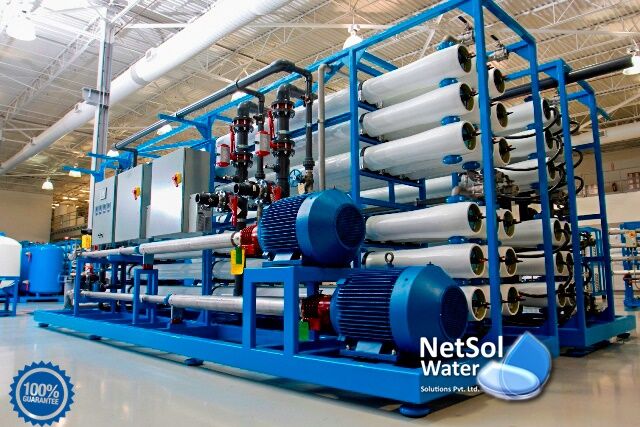
An experienced Industrial RO Plant Manufacturer understands these systems need engineering fundamentally different from commercial grade equipment, tougher pumps, larger membrane configurations, and control systems rated for sustained, continuous cycling rather than intermittent use.
Why Component Selection Matters So Much At This Scale
At industrial volume, even small inefficiencies compound quickly. A pump running slightly below its rated efficiency doesn't just waste a small amount of energy, it does so continuously across thousands of operating hours every year, turning a minor inefficiency into a meaningful cost over the system's lifetime. This is exactly why industrial systems benefit from components explicitly rated for continuous heavy duty use rather than equipment adapted from commercial applications and pushed beyond its intended operating range.
Why Proper Water Testing Changes The Entire Design
No two industrial facilities draw from identical water sources, and no two production processes generate identical water quality requirements. A pharmaceutical facility needs purity standards that look nothing like what a metal processing unit requires. A capable manufacturer studies actual feed water composition and specific process requirements before designing anything, rather than pushing the same standard package onto every client regardless of what they actually need.
Skipping this step tends to backfire in ways only obvious once the system is running under real production conditions, whether that's inadequate output during peak demand, membranes fouling faster than expected due to unaccounted contaminants, or water quality falling short of what a specific process genuinely requires.
The Downstream Consequences Of Skipping This Step
A factory that installs a system based on assumed rather than tested water quality often discovers the mismatch only after production begins, when membranes foul faster than expected or output quality doesn't quite meet what a specific process needs. Correcting this after installation typically means retrofitting additional pre-treatment stages, a considerably more expensive and disruptive fix than getting the design right the first time based on proper testing.
Sizing The System Around Real Daily Demand
Getting capacity right matters as much as getting technology right. A system sized too small struggles constantly during peak production, wearing out components faster and leaving factories short exactly when water is needed most. One sized too generously wastes capital on capacity that sits unused most days, along with the ongoing energy cost of running oversized equipment well below its efficient operating range.
Calculating this properly means looking at actual shift patterns, peak production hours, and realistic growth projections rather than a rough guess based on factory floor size alone. A capable manufacturer walks through these numbers before proposing anything, rather than handing over a standard package and hoping it fits.
Building In Room For Growth Without Overbuilding Today
The right approach usually involves designing a system that can be expanded later, through additional membrane trains or upgraded pump capacity, rather than either underbuilding for current needs or overbuilding based on speculative future growth. This modular approach to expansion lets a factory match investment to actual demand as it materializes, rather than tying up capital in capacity that might not be needed for years, if at all.
Why Automation Matters More At Industrial Scale
Manual monitoring alone doesn't hold up well in continuous industrial settings. Night shifts and weekend production runs see less consistent oversight simply because fewer people are physically present to catch a developing issue before it escalates. Automated systems tracking pressure, flow, and water quality continuously, flagging anything drifting outside normal ranges, catch these issues early regardless of who's on shift or how busy the floor happens to be.
For facilities running near continuous production, this kind of automation isn't a luxury add on, it's genuinely what prevents a water treatment issue from turning into a production halt costing far more than the fix itself would have.
What Automated Monitoring Typically Tracks
A properly automated industrial RO plant continuously monitors feed pressure, permeate flow, conductivity or TDS of the output water, and often membrane differential pressure as an early indicator of fouling. Alerts triggered by any of these parameters drifting outside set ranges give facility teams the chance to intervene before a developing issue turns into an actual production interruption, rather than discovering the problem only once output has already dropped noticeably.
What To Actually Check Before Choosing A Manufacturer
A handful of questions separate a manufacturer worth trusting from one likely to leave a factory dealing with recurring problems. Ask directly whether they conduct proper water testing before proposing any design, whether they can point to similar industrial projects they've completed, and how transparent they are about long term running costs, membrane replacement, energy consumption, and routine servicing, rather than just the installation invoice.
Response time deserves equal attention. A production halt caused by water treatment failure costs a factory far more than the repair itself once lost output gets factored into the equation, making a manufacturer's local service presence a genuinely important consideration.
Treating This As Long Term Infrastructure
Factories that view their RO system as core infrastructure, rather than equipment installed once and forgotten, consistently see fewer disruptions and lower costs across the years the system operates. This mindset, prioritizing proper design and genuine ongoing support over the lowest quote on day one, is what separates factories running smoothly from those constantly firefighting water related production problems.
For industrial units looking to build a water treatment system that genuinely holds up under continuous, heavy duty demand, Commercial RO Plant brings the technical depth, experience, and long term commitment that industrial operations actually need to keep running reliably for years to come.


Comments
Post a Comment