Commercial RO Plant Manufacturer In Delhi: How to Get This Decision Right
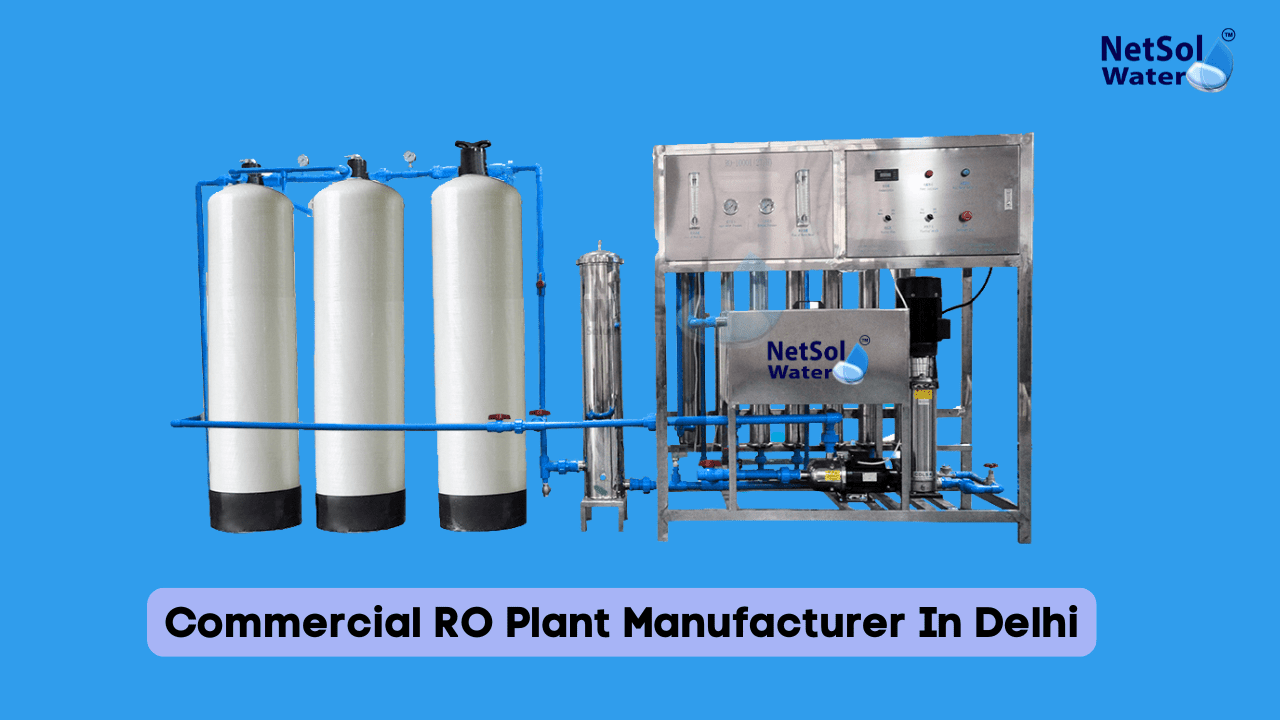
Delhi's commercial sector never really slows down. Offices, hospitals, hotels, retail chains, and countless smaller businesses all depend on water that's genuinely fit for use, not just water that happens to come out of a tap. Over the past several years, more businesses across the city have moved away from relying entirely on municipal supply and tankers, choosing instead to set up their own treatment systems. That shift has made finding a genuinely reliable Commercial RO Plant Manufacturer In Delhi a real business decision rather than an afterthought handled once construction is done.
Why Municipal Supply Often Falls Short
Groundwater and municipal supply across different parts of Delhi carry noticeably different mineral content and contamination levels. Some areas deal with higher hardness, others with elevated TDS, and inconsistent chlorination is common depending on how far a property sits from the main supply line. A business that assumes incoming water is automatically clean enough often discovers otherwise through scaling in equipment, poor tasting drinking water, or complaints from staff and customers that trace back to water quality nobody checked properly.
Supply interruptions happen more often than businesses expect too. Tanker delays and municipal cuts are common across Delhi, particularly during summer months when demand spikes citywide all at once. A business running its own RO system isn't left scrambling when external supply falls short, which matters enormously for operations that simply cannot afford downtime.
Why This Problem Varies So Much Across Delhi
Delhi isn't one uniform market when it comes to water. South Delhi properties often draw from municipal supply with its own set of quirks, while parts of North and West Delhi lean more heavily on groundwater carrying different hardness and TDS profiles entirely. A business relocating or expanding to a new part of the city can't assume its previous location's water conditions apply at the new site. This is exactly why a manufacturer who works across the whole city, rather than one confined to a single pocket, brings genuinely useful perspective to a new installation.
What Makes Commercial Systems Genuinely Different
Commercial spaces need consistent water output across long operating hours, sometimes around the clock, and equipment built for occasional residential use simply isn't designed to handle that kind of sustained demand without breaking down within a year or two.
Sizing has to match real usage too, not guesswork. Every commercial property has a different consumption pattern depending on footfall, hours of operation, and the nature of the business itself. A hotel's demand looks nothing like an office building's, and a hospital often needs an entirely different purity standard for specific medical applications. Getting the sizing wrong in either direction causes problems, an undersized system strains constantly, while an oversized one wastes money on capacity that never gets used.
Why Oversizing Isn't a Safe Default Either
Some businesses assume buying more capacity than needed is the safer choice, treating it as a buffer against future growth. In practice, oversized systems run inefficiently at partial load for extended periods, drawing more energy per unit of output than a correctly sized system would, and tying up capital in equipment that sits underused for years. The better approach is sizing accurately for current needs while designing the installation to allow for a capacity upgrade later, rather than buying oversized equipment upfront on the assumption that growth will eventually catch up to it.
Questions Worth Asking Before Signing With Anyone
A reliable Commercial RO Plant Manufacturer In Delhi always starts with testing the actual water source, checking hardness, TDS, and contamination levels, before recommending any specific system. Skipping this step means the design gets built on assumptions instead of facts, and that gap tends to surface months later as reduced output or components failing earlier than they should have.
Beyond water testing, it's worth checking whether the manufacturer is upfront about long term running costs, membrane replacement, energy use, and routine servicing, rather than just quoting an installation price and leaving the rest vague. Ask about their local service team and how quickly they can respond if something breaks down. And ask for references from businesses similar to yours.
Why Response Time Matters More Than People Expect
When something goes wrong in a functioning commercial space, every hour without water has a real cost attached to it. A manufacturer based outside Delhi, or one without a proper local service presence, can leave a business waiting days for a technician while operations sit affected. A manufacturer with genuine local reach can usually get someone on site the same day, which makes a real difference for businesses running on tight margins where downtime translates directly into lost revenue.
Looking at This as an Investment, Not Just an Expense
More businesses across Delhi are starting to treat their RO system as core infrastructure, something that protects daily operations and service quality, rather than a background utility nobody thinks about until it fails. That shift in thinking is pushing standards higher across the commercial sector, and it's exactly why the manufacturer chosen at the outset matters so much to how smoothly things run for years afterward.
For businesses across Delhi looking to get their commercial water treatment right, Commercial RO Plant brings a grounded, experience led approach built around proper water testing, systems designed for each business's actual daily demand, and long term support that keeps operations running the way they should.


Comments
Post a Comment