What Are The Benefits Of Hiring Sewage Treatment Plant Manufacturer In Ghaziabad ?
In the last ten years, Ghaziabad has seen tremendous growth, evident from the continuous expansion of residential zones, commercial complexes, and industrial units in the area. All this growth is bound to create an issue, which generally fails to garner the necessary amount of attention till it becomes inevitable: sewage management. Every residential colony, hotel, hospital, and factory produces some sort of sewage daily, and these have to be disposed of somewhere. Dumping these untreated waters into drains or any vacant land is not only hazardous but also violates the current laws on pollution.
A sewage treatment plant isn't some optional add on anymore. It's turned into a basic requirement for any building or facility that wants to run without regulatory trouble knocking on its door. This blog breaks down why that shift happened, how these plants actually function, and what really matters when picking a manufacturer.
Why Sewage Treatment Has Become Non Negotiable
Ghaziabad sits close to the Hindon river, and untreated sewage flowing into that river has already caused some serious pollution problems over the years. Local authorities have tightened enforcement quite a bit because of this, and buildings without proper sewage treatment now face consequences that are hard to ignore, including:
A) Fines that add up fast depending on the violation
B) Delayed occupancy certificates for new construction
C) Water connections cut off until compliance gets sorted
Beyond the legal angle, there's a practical reason too. Ghaziabad, like most of NCR, deals with water stress every summer without fail. Reused treated water from an STP can handle gardening, flushing, and cooling needs without pulling extra water from municipal supply or borewells. That's not a small saving when water tables keep dropping the way they have been.
Housing societies also feel pressure from residents themselves these days. Nobody wants to live near a smell that never quite goes away, and a poorly maintained sewage system creates exactly that kind of problem. A working plant keeps things clean, keeps residents happy, and keeps the property value intact. Simple as that.
How A Sewage Treatment Plant Actually Works
Water from sewage is not homogenous at all. There are organic materials, soaps, oils, and numerous dissolved solids contained in it, and its proper treatment requires removal of everything to make it reusable or safe for discharge.
Screening is normally the first stage of the process when large solid waste is sifted out to protect the following equipment from damage. Next, the water goes into primary settling tanks where heavy materials settle down to the bottom of the tank, and this single stage filters out a significant amount of pollutants.
Biological treatment does the heavy lifting after that. The bacteria decompose the organic matter present in the water, and based on the type of plant, there are techniques that may be used such as the activated sludge process, sequencing batch reactors, and moving bed biofilm reactors. These techniques have their own merits, and the right manufacturer makes sure that the technique used is the appropriate one and not just the cheapest one.
Secondary treatment takes care of the clarification of water whereby the rest of the suspended particles are removed. The polishing step usually involves filtration and disinfection of the water using chlorine or UV treatment. A trustworthy Sewage Treatment Plant Manufacturer In Ghaziabad ensures that these processes happen as a coordinated system and not a mere collection of systems put together.
What To Check Before Hiring A Manufacturer
Not every manufacturer builds plants that hold up over time. Some cut corners on materials, some oversell capacity the plant can't actually deliver, and some vanish the moment installation wraps up. Knowing what to check upfront saves a lot of regret later.
Design experience matters more than most people realize going in. A plant built for a 50 flat housing society needs a completely different approach than one built for a hospital or a manufacturing unit, and a manufacturer who understands that difference usually delivers a system that performs the way it was promised to.
A few things worth confirming before signing any contract:
1) Track record with similar project sizes and building types
2) Compliance with UPPCB (Uttar Pradesh Pollution Control Board) discharge norms
3) Availability of trained staff for operation and maintenance
4) Warranty terms and spare parts support after installation
Cost obviously matters too, but the lowest quote rarely turns out to be the smartest choice. Cheaper plants often use lower grade materials that wear out fast, and running costs end up climbing over time in ways that quietly erase whatever got saved upfront.
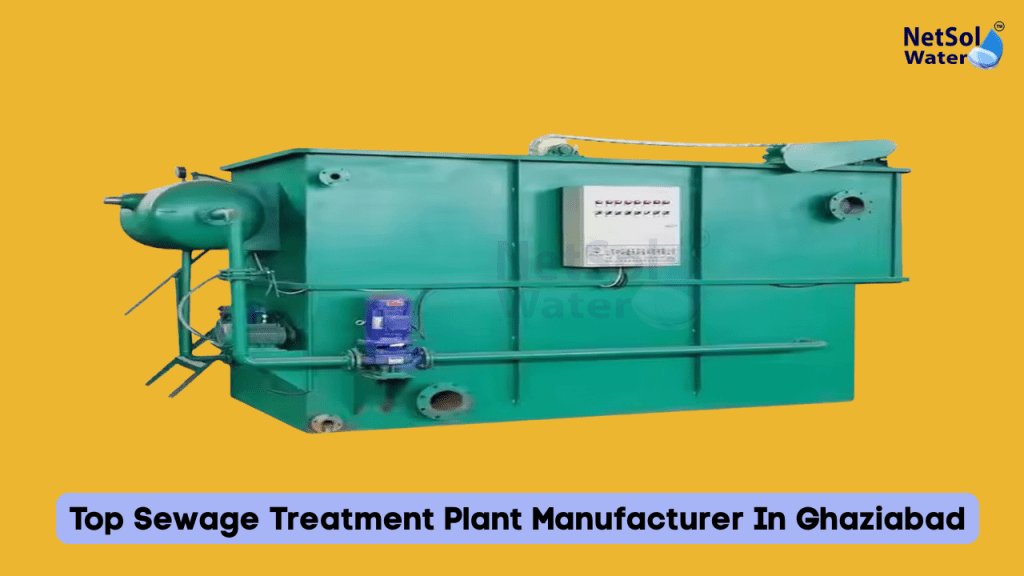
Common Technologies Used In Sewage Treatment
Different building types and pollutant loads call for different treatment technologies, and understanding the basic differences helps a lot during vendor discussions.
Sequencing Batch Reactor systems process wastewater in timed batches rather than continuously, which suits sites where flow varies a lot throughout the day, like hostels or commercial complexes. Moving Bed Biofilm Reactor systems work well where space is tight, since the biofilm carriers used in this method shrink the footprint compared to older designs. Activated sludge systems remain popular for larger facilities that can accommodate bigger tanks and want a proven, well understood method.
Membrane technology has gained ground recently too, especially where treated water needs to meet stricter reuse standards. It costs more upfront, sure, but the output quality justifies that cost for facilities planning heavy water reuse.
3 Mistakes That May Cost Money Later
Planning mistakes made early on tend to surface months or years down the line, usually right when they're hardest to fix.
Sizing a plant only for current occupancy is one of the most common errors out there. Buildings expand, occupancy grows, and a plant with zero buffer capacity ends up overloaded within a few years, forcing an expensive upgrade that could've been avoided with better planning at the start.
A handful of other missteps show up again and again on projects:
B) Skipping proper soil and site testing before construction begins
C) Treating maintenance as an afterthought instead of part of the deal
D) Ignoring sludge removal schedules until problems start piling up
Getting any of these wrong rarely shows up right away. It tends to surface at the worst possible moment, usually once the building is already occupied and there's no easy fix left on the table.
Understanding Cost Factors
Pricing for a sewage treatment plant depends on daily capacity, treatment technology selected, and the level of automation included. Larger capacity plants naturally cost more, but the cost per liter treated often drops as capacity increases, making bigger systems more efficient on a per unit basis.
Civil work, the tanks, the piping, the foundation structures, usually accounts for a big share of the total project cost, sometimes more than the mechanical equipment itself. That tends to surprise people who assumed the machinery would be the expensive part. Automated systems with remote monitoring cost more initially but cut down the need for round the clock manual supervision, which often balances out over a few years of operation.
As a general planning range, project costs typically break down across civil construction, mechanical and electrical components, automation systems, and annual maintenance contracts. Getting a detailed, itemized quote from any Sewage Treatment Plant Manufacturer In Ghaziabad helps avoid nasty surprises once construction actually begins.
Choosing A Partner Built On Technical Depth
Choosing the right Sewage Treatment Plant Manufacturer In Ghaziabad will dictate how effectively a plant runs in the years to come. This includes matters pertaining to regulation, operating costs, eco-friendliness, and the reputation of the property itself.
Commercial RO Plant has earned a great reputation across India by delivering reliable and technically sound water and wastewater treatment solutions.Commercial RO Plant is an ISO certified RO Plant Manufacturer and Supplier operating across the country, bringing deep expertise to sewage treatment projects of every scale, from residential societies to large industrial campuses. Every plant gets engineered around actual site conditions and wastewater characteristics rather than copied from some generic template, and technical support continues well after installation wraps up.
Buildings and facilities looking for a manufacturer that treats compliance and performance as equally important should reach out to Commercial RO Plant. Hiring an experienced Sewage Treatment Plant Manufacturer In Ghaziabad like Commercial RO Plant means fewer regulatory headaches, lower long term operating costs, and a system built to actually last.


Comments
Post a Comment